
About Me
Education
Master of Education in higher education administration from the University of South Carolina.
Bachelor of Arts in English with a communications concentration from Armstrong State College (now Georgia Southern University).
Professional Associations & Awards
Former VP for Finance for the Western Ohio Chapter of the Association for Talent Development (ATD)
Member, Midlands South Carolina Chapter of ATD (ATD-Midlands)
National Association for Campus Activities (NACA) Southeast Region Outstanding Professional of the Year
Three-time finalist for Colonial Life's Aspire award, recognizing customer service excellence among home office employees
Colonial Life Outstanding Field Training and Development employee, Q3 2024
A Little Bit More...
Educational professional with an extensive background in corporate training, instructional design, curriculum development, classroom and virtual delivery, e-Learning, new-hire onboarding, sales training, and learning management systems. I possess, what I believe to be, a unique blend of instructional design skills and training skills: I am as effective teaching an audience of 200 people as I am alone in front of a computer developing e-learning modules or creating workbooks.
Knowing how to interact with stakeholders is a key part of the instructional design process. I would suggest that it is even more important than technical skills. I am able to consult with and counsel stakeholders at every level of an organization, helping them identify learning gaps, articulate desired learning outcomes, and outline learning strategies to close those gaps.
Personal
Born and raised in Savannah, Georgia and along its coasts and rivers, I'm an avid fan of all Georgia sports teams, including the Georgia Bulldogs and the Atlanta Braves (long before either was fashionable), as well as the Atlanta Falcons (which has never been fashionable).
In my free time, I enjoy movies, reading, photography, cartooning, and writing short stories.
Currently, I live in Columbia, South Carolina (USA) with my wife and our four children.
Self-paced Learning Samples

Feedback from sales managers suggested that many new agents did not fully understand the role of social media in building and growing their businesses. In response, I partnered with sales leaders and subject matter experts to create Social Media 101, a module now included in the new agent onboarding pathway. This excerpt is an interaction from that module.
Tools used: Articulate Storyline, Adobe Illustrator, Adobe Photoshop, JavaScript, WellSaid AI Voiceover Studio.

This brief video introduces the key elements of the LinkedIn profile page. It was part of a curriculum I created that improved managers’ recruiting efforts by helping them build stronger, more competitive LinkedIn profiles.
Tools used: Vyond, Camtasia, Adobe Audition, Adobe Illustrator, Adobe Photoshop.
With more than 6,000 independent sales agents nationwide, turnover is a consistent challenge. To boost recruiting efforts, we created a curriculum that introduced sales managers to the practice of sourcing candidates via LinkedIn. This is one module from a 7-part curriculum.
Tools used: Camtasia, WellSaid Labs.
An international in-home care provider introduced a private duty nursing program, which permitted licensed caregivers to perform limited, specific tasks that might be medically related. As the Learning and Development Manager, I consulted with our corporate nursing staff and multiple business coaches to create a self-paced curriculum of 5 modules. This is a sample of one of those courses.
Tools used: Articulate Rise, Adobe Illustrator, Adobe Photoshop.
Sample Training Reference Materials
Below are samples of workbooks and quick reference guides that I've created. Some proprietary material has been replaced with filler content or placeholder text.
Tools used: Tools varied from project to project, but in most instances I used a combination of Adobe Acrobat, Adobe InDesign, Adobe Illustrator, Adobe Photoshop, Microsoft Word, and Microsoft PowerPoint.

A state-wide law firm that I worked for migrated their workforce of about 100 to new PCs and the new Microsoft Office suite of products. As the training manager, I was responsible for training our employees on the new product. This is the advanced skills for Excel workbook that I created and was distributed to all end-users.

A pivotal revelation for businesses during the early 2020s pandemic was that remote work and training are not only possible, but are viable, practical alternatives to traditional practices. This is a handbook/guide provided to facilitators of a virtual training class that introduced benefits enrollers to the concept of strategic sales skills.
The home health care organization that I worked with rolled out a new program for its nationwide network of franchise owners. I created this workbook, which was provided to franchisees during the national rollout of the new care program.

This a sample of a one-page quick reference sheet I created.
PowerPoint
Select an image or heading to download one of the files below.
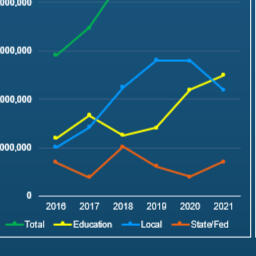
This is a sample pulled from a larger deck that I designed for a Senior VP of Sales. Proprietary information has been removed and replaced with generic info.
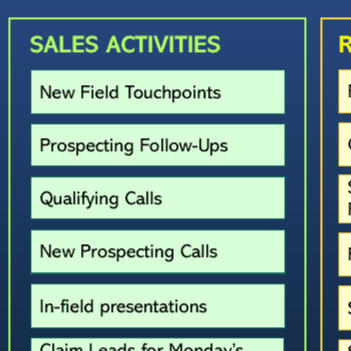
During a recent refresh of our company's new sales manager training, a focus group of veteran managers suggested a more impactful way of conveying the different tasks required for continued growth. This was also included as part of my DevLearn 2025 presentation. (See below.)

As part of a virtual learning that introduced benefits enrollers to the concept of strategic selling, we wanted something a little more interactive to allow learners to practice positioning solutions to potential enrollees. In addition to being used in a virtual training session, this interaction was used in person on a Smart Board.

I delivered the session Enhancing Data & Process Visualization in PowerPoint at DevLearn 2025, where I shared strategies for applying Cognitive Load Theory to the design and presentation of different data and processes. The discussion highlighted how pairing the morph transition with carefully chosen, subtle, yet impactful, animations can enhance clarity and boost learner retention.
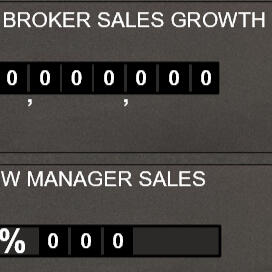
The theme of a recent annual sales meeting centered on acceleration, highlighted by a logo featuring a digital tachometer. For his presentation, one of our vice presidents wanted to somehow tie in the energy of the Fast and Furious movie franchise, requesting a creative reveal of the company’s year‑end sales numbers. I designed a slide where the figures appeared through an odometer‑style animation.
In-person Training and Instruction
Adjunct faculty
Belmont Abbey College (NC, USA)
Georgia Southern University (USA)
Radford University (VA, USC)
Classroom training
LexisNexis
New sales hire training/onboarding
Nationwide rollout training of new CRM system
Facilitated sessions at annual sales meetings
CK Franchising, Inc.
Bi-monthly new franchisee training
Quarterly nationwide workshops
Led sessions at annual leadership conference
Turner Padget Graham & Laney P.A.
New hire training/onboarding
Facilitated MS Office 2010 training as part of statewide PC refresh
Conference workshops & presentations
| The Art & Science of e-Learning | Annual ATD Midlands Workshop - Columbia, SC (USA) | 2017, 2018, 2019 |
| Enhancing Data & Process Visualization in PowerPoint | DevLearn - Las Vegas, NV (USA) | 2025 |
| The Art & Science of Instructional Design | ATD South Carolina February webinar | 2026 |
Skills: Michael West, Senior Instructional Designer
Case Studies
Initiatives I led that required critical analysis, problem‑solving, and creative learning solutions.

LexisNexis
New Hire Training Revamp

CK Franchising, Inc.
LMS Release

Colonial Life
Public Sector Curriculum
LexisNexis New Sales Hire Training Revamp
CK Franchising, Inc. LMS Transition
Colonial Life Public Sector Curriculum
Professional Competencies
Operational & Organizational Management
Strategic planning and management of budgets totaling as high as $1.3 million
Executive‑level oversight of facility operations and service delivery, including 68,000 square foot university student center
Served as the primary operations representative on the design and development committee for Radford University’s new student involvement center
More than 7 years' experience in leadership of professional and administrative teams
Strategic budget planning and financial stewardship across multi‑million‑dollar portfolios
Cross‑functional collaboration with executive leadership, operations, IT, and external partners
Special Events Management
Produced several major concerts and regional conferences
Coordinated logistical needs for the regional conferences, including sound and light production bids and contracts; blocks for hotel room blocks; venue set-ups; and load-in schedules
End‑to‑end program planning and logistics strategy for complex, multi‑day events, including regional conferences, new-hire onboarding, concerts, and other organization-wide events
Vendor Engagement and Relationship Management
High‑level vendor management and contract negotiation with national partners
Managed contracting process and vendor relationships with multiple learning management systems providers
Negotiated and secured lease agreements with hotels, convention centers, and sound and lights packages for major concerts and regional conferences